
10 Best Breathing Exercises for Mental Health You Should Try | Safe and Sound
Focusing on your breath is one of the interesting and effective methods to improve health and enhance feelings of well-being. According to psychologists and mental health counselors, ancient civilizations recognized the benefits of regulating breath for balancing mind and body thousands of years ago. Today, breathing exercises have become a popular trend in health care and maintaining balance in life.
Ngo Thi Sang | Master of Education – Institute of Psychology and Mental Health (SnS)
Center for Community Health and Development Research
1. 3 breathing exercises to help you relax, reduce stress and anxiety
- Pursed-lip breathing
This is a great breathing exercise for reducing stress and anxiety , but it's also helpful for people with asthma or COPD (Srivastava & Singhal, 2005). Psychologists and mental health counselors say that pursed-lip breathing exercises help activate the diaphragm and increase oxygen intake. To perform this exercise, simply inhale slowly through your nose and exhale through your mouth with your lips pursed (as if you were using a straw). Make sure the exhale is twice as long as the inhale.
- Box ventilation
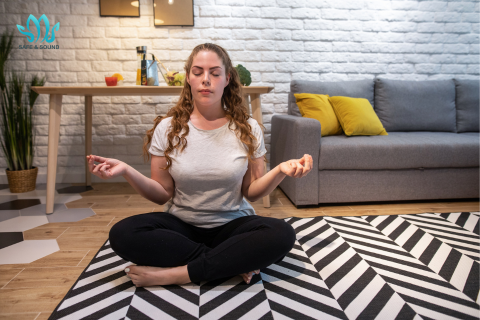
Box breathing or square breathing
Also known as square breathing, this breathing exercise has been shown to reduce stress and improve concentration (Sharma et al., 2014). According to psychologists and mental health counselors, this breathing exercise involves inhaling through the nose while counting to four, holding your breath while counting to four, exhaling slowly while counting to four, and then holding your breath while counting to four again, essentially forming a “square” or “box” with your breath.

- Breathe 4-7-8
The 4-7-8 breathing exercise is particularly helpful for falling asleep (Arizona Center for Integrative Medicine, 2010). Focusing on your breath and counting can distract your mind from anxious and brooding thoughts. This technique involves inhaling through your nose while counting to four, holding your breath while counting to seven, and exhaling through your mouth while counting to eight.
2. 3 breathing exercises to help manage panic attacks
- Postpartum Muscle Relaxation Therapy (PMR)
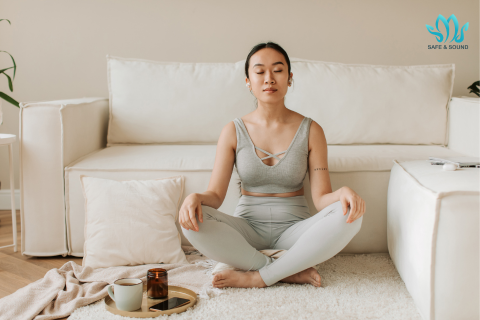
Muscle relaxation therapy
According to psychologists and mental health counselors, PMR is a technique involving actively contracting muscles to create tension and then gradually releasing it throughout the body. This technique was developed by Edmund Jacobson in the 1920s. PMR typically involves creating and relaxing muscle tension, along with using breathing and concentration techniques to help reduce psychological stress. By relaxing the muscles, we can release pressure and tension in the body, helping the body and mind return to a state of balance and relaxation.
- Inhale the scent of lavender.
Research has shown that inhaling lavender essential oil significantly reduces anxiety in a short period of time (Donelli, Antonelli, Bellinazi, Gensini, & Firenzuoli, 2019). According to psychologists and psychotherapists, lavender was the preferred anxiety-reducing scent in this study, but other essential oils may offer similar calming effects depending on personal preference.
Simply open the bottle of oil and slowly inhale the scent through your nose and exhale through your mouth; this is a fairly effective breathing exercise.
- Breathing exercise 5–4–3–2–1
This breathing exercise involves looking at five objects, listening to four sounds, touching three objects, identifying two smells, and naming one thing you can taste. Psychologists and mental health counselors say this breathing exercise will bring you back to focus on the present moment and can help distract your mind from panic.
3. One mindfulness meditation and three yoga breathing exercises.
Mindfulness meditation is a great breathing exercise for reducing stress, anxiety, high blood pressure, and even depression (Taylor, 1994). Psychologists and mental health counselors say that mindfulness meditation is simple yet quite difficult to practice. The idea of mindfulness meditation is to focus on the breath, and when the mind is drifting, gently bring the mind back to the breath, noticing the thoughts that come and go without judgment.
Breathing is a crucial part of yoga and is known as pranayama. It is the foundation of any yoga practice, and when combined with movement and postures, breathing can offer tremendous therapeutic potential. Some specific breathing exercises commonly practiced in yoga include:
- "Lion's Breath": This breathing exercise helps stretch facial muscles and reduce stress (Li & Goldsmith, 2012). According to psychologists and mental health counselors, this exercise involves taking a deep breath through the nose and exhaling forcefully through the mouth with the mouth wide open, tongue sticking out, and eyes looking upwards. While it may seem unusual, psychologists and mental health counselors say it helps stretch facial and neck muscles and can release jaw tension.
- Alternate nostril breathing exercise: Psychologists and mental health counselors advise starting by closing your right nostril with your right thumb and inhaling deeply through your left nostril. Then, close your left nostril with your left thumb and exhale through your right nostril. This completes one breathing cycle. Continue repeating this process, alternating between both nostrils.
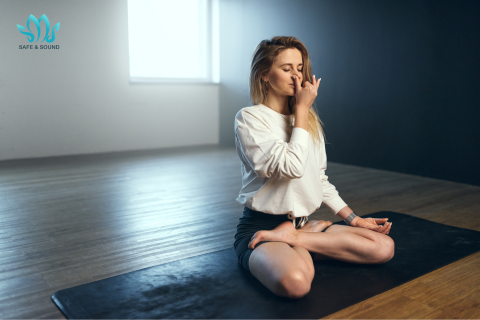
Alternate nostril breathing exercise
- Deep breathing exercises: also known as lung breathing or abdominal breathing. According to psychologists and mental health counselors, this is a breathing practice that focuses on lengthening and deepening the breathing movements, including inhalation and exhalation. When performed correctly, deep breathing techniques can offer many benefits to both mental and physical health.
To help our customers, Safe and Sound experts are always there to support you:
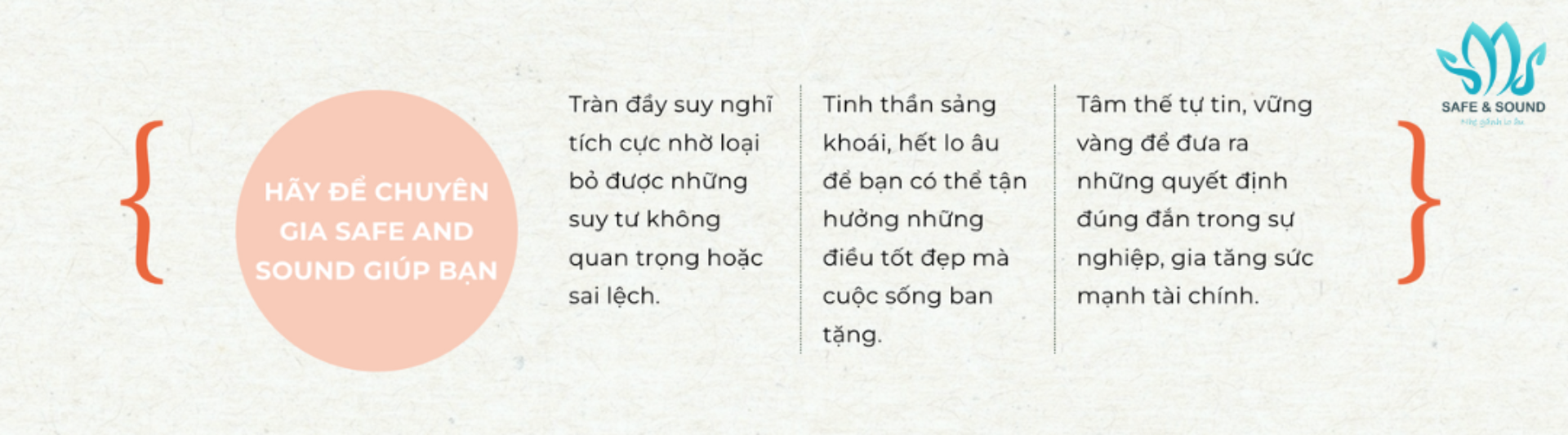
A brain filled with positive thoughts is created by eliminating unimportant or misleading thoughts.
- A refreshed and worry-free mind allows you to enjoy the good things life has to offer.
- A confident and steady mindset enables faster and more accurate decision-making at work, thereby increasing financial strength, career success, and self-esteem.
4. How can the Safe and Sound team of experts assist you?
We understand that psychotherapy can sometimes be a difficult step, and trying to find a new psychologist or psychiatrist who is a good fit for your individual needs and personality can be a challenging and challenging task.
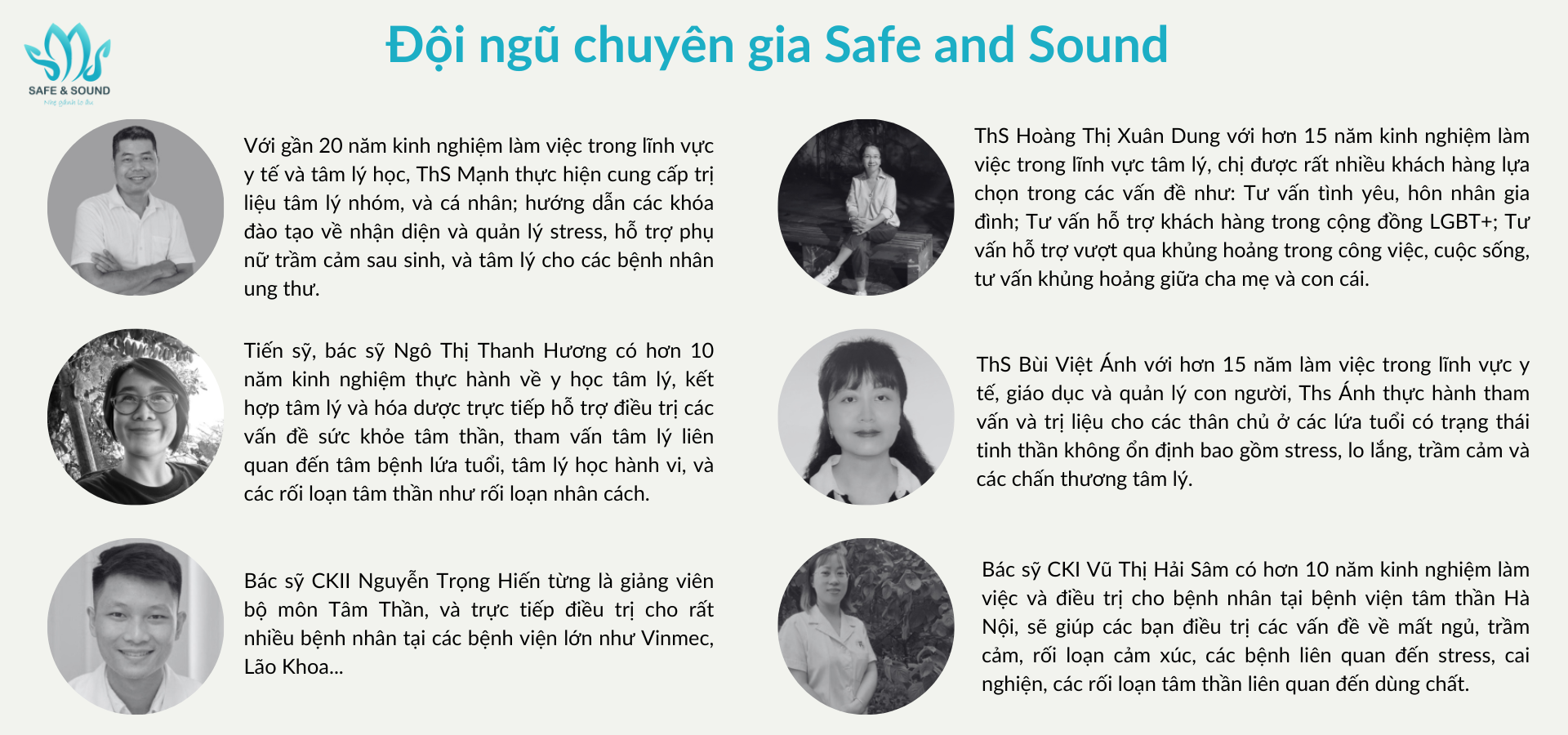
We believe that the combination of a psychologist and a psychiatrist will provide the best support for you. Safe and Sound's team of experts meets rigorous standards, helping you address a wide range of mental health issues including: postpartum depression, anxiety, schizophrenia, sleep problems, mood disorders, relationship issues, mental trauma, and more.
- Extensive professional experience dealing with a wide range of psychological issues.
- Skills in assessing, consulting, and developing effective support plans.
- Flexibly combine techniques and methods to effectively support and maintain sustainable results.

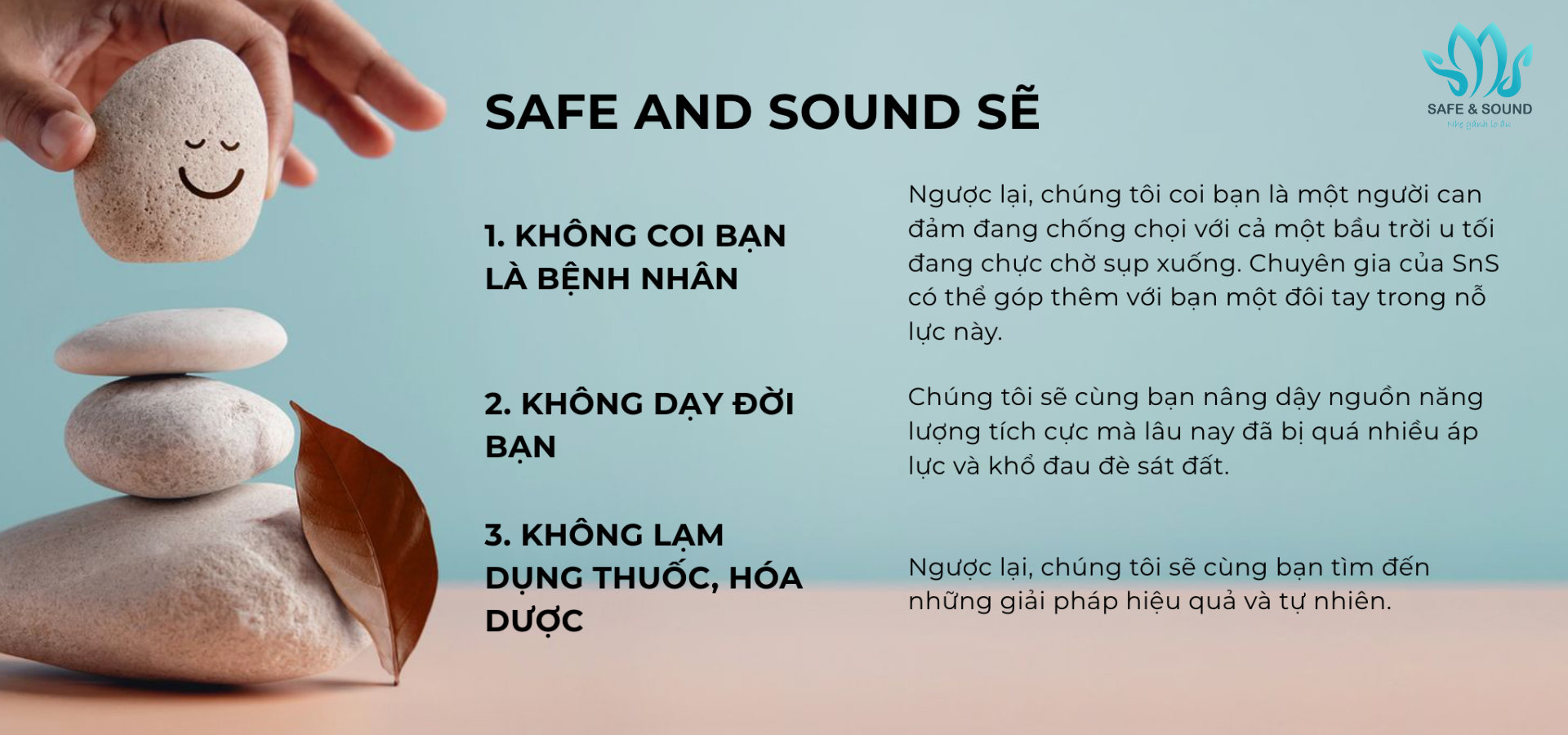
In addition, Safe and Sound will:
- We don't see you as a patient: Instead, we see you as a courageous individual battling against a dark sky threatening to collapse. SnS experts can lend you a helping hand in this endeavor.
- We won't lecture you: We will work with you to rekindle the positive energy that has long been suppressed by so much pressure and suffering.
- Avoid the overuse of medications and chemicals: Instead, we will work with you to find effective and natural solutions.

Safe and Sound Clinic - Family mental and health support
With a team of experienced doctors and specialists, Safe and Sound Clinic is a pioneer in comprehensive healthcare, offering services ranging from medical to psychological care.
"Early preparation - Timely support - Long-term partnership."
If you suspect or experience any physical or mental health problems, please contact our HOTLINE at 0964 778 911 (Phone/Zalo, 24/7) for prompt assistance and answers!
HOW TO SCHEDULE AN APPOINTMENT for online or in-person consultation with a specialist.
- At the SnS Clinic - IMT Institute
- Alternatively, download and schedule a consultation on the Safe and Sound app to manage and track your appointments anytime, anywhere.
Safe and Sound (SnS) - part of the Institute of Applied Medical Technology (IMT)
